 Building Information System
News
Recent News
Self-Employed Persons Will Be Allowed to Carry Out Certain Construction Works
Published Thursday, 24 September 2026Changes Proposed by the Ministry of Justice: Building Registration Costs to Fall by More Than 90% in Some Cases
Published Thursday, 24 September 2026Construction Process to Become More Flexible – Cabinet Approves “Zero Cycle” to Enable Earlier Start of Construction Works
Published Tuesday, 22 September 2026446 Violations Identified During Targeted Inspections in the Construction Sector
Published Tuesday, 22 September 2026Government Supports Unified Building Registration Process
 Published
Tuesday, 16 September 2025
Published
Tuesday, 16 September 2025
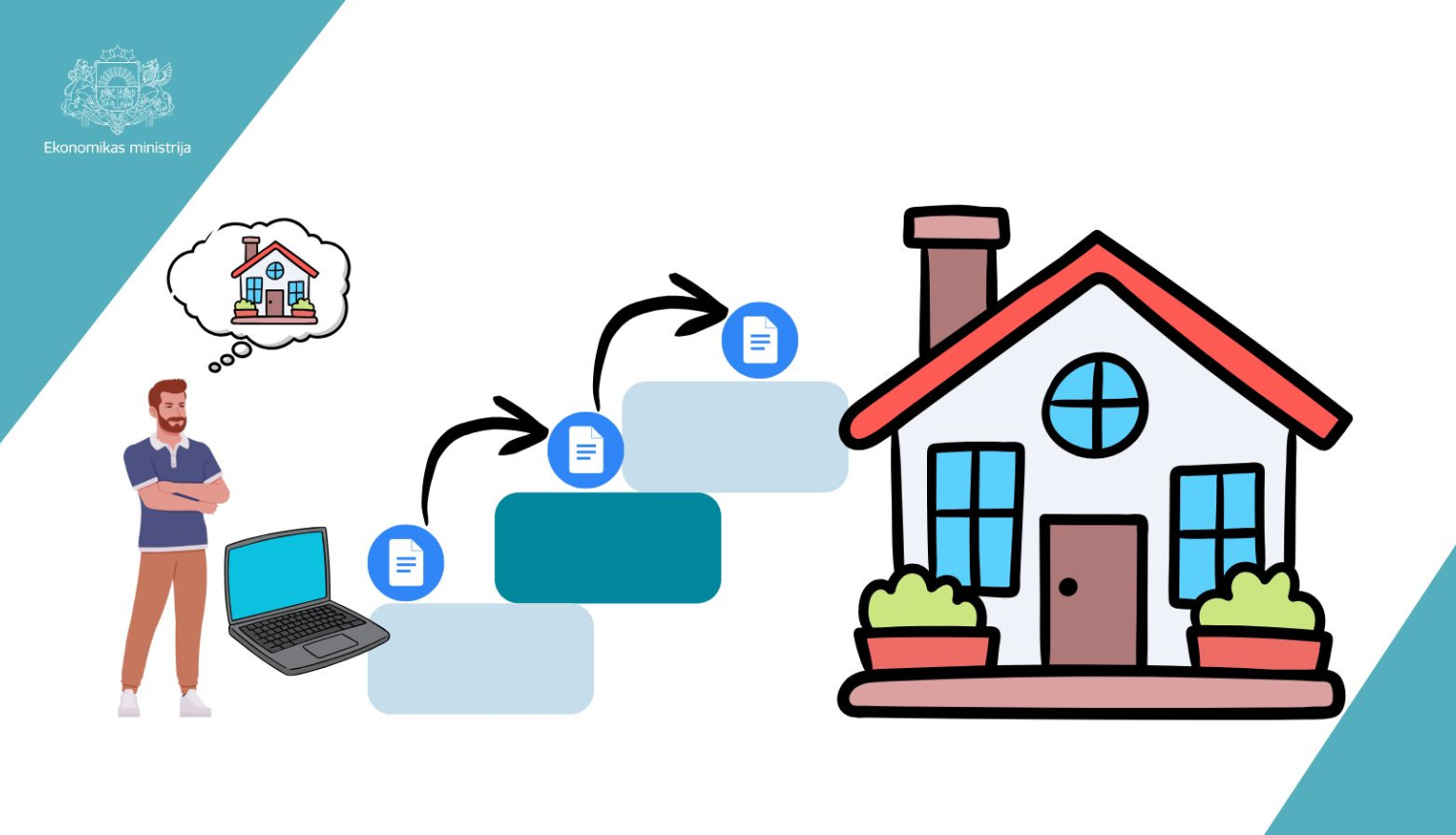
From January 1, 2026, a construction application will also serve as an application for further registration of the building in the State Real Estate Cadastre Information System, and later for registration in the Land Register.
This means that the person will no longer need to apply separately to three institutions to complete the development of their property. After the building is commissioned, data about the building will be automatically transferred to the information systems for cadastral registration and later for recording in the Land Register. This will eliminate data duplication and prevent the need for cadastral measurement of the building.
This scenario will be implemented if the amendments to the Construction Law, prepared by the Ministry of Economics (EM), as well as the related amendments to the Land Register Law and the Law on the Registration of Real Estate in the Land Registers, developed by the Ministry of Justice, which were approved by the government on Tuesday, September 16, are also supported by the Saeima. All three bills contain a unified regulation for introducing a unified building registration process from the initiation of the construction process to the confirmation of property rights.
The developed draft law will introduce the one-stop-shop principle, i.e., a single application for three institutions, which is logical because the process of developing real estate starts with initiating construction and ends with the registration of the building and its entry into the Land Register. Data and documents about buildings will be automatically obtained from the Construction Information System and forwarded to the related systems, ensuring a continuous process and saving time and financial resources,” emphasized the Minister of Economics, Viktors Valainis.
The proposed regulation will apply to both new construction and reconstructions and renovations—it will be applicable to construction projects initiated after the law comes into force, as well as those initiated before the law comes into force but where the commissioning occurs after the law comes into force (provided that all prerequisites are met).
The developed changes stipulate that the cadastral data registration for buildings will take place after the building is commissioned. It is also planned that the State Land Service will obtain cadastral data for buildings from the Construction Information System, instead of conducting inspections and measuring the buildings. The procedure for maintaining building data in the BIS, so they can be automatically transferred to the cadastral data registration, will change.
The procedure for registering objects in the Cadastre or entering them into the Land Register will not change. For example, temporary buildings (buildings necessary for construction work, which must be demolished before the object is commissioned), melioration works, etc., will not be registered in the Cadastre.
The bill will define the regulation and responsibilities for implementing the unified building registration process (Construction Information System (BIS) - Cadastre - Land Register). Currently, the functionality of the information systems of all three institutions is being actively adapted for the implementation of this unified process.
Ministry of Economics
Public Relations Department
Email: prese@em.gov.lv
Page refreshed on 2025-09-16


Change cookie preferences
|
State Construction Control Bureau
|
In case of reproduction of information, reference to the Building Information System is mandatory.
|
Build: 27116-C (20261015200112) (production)